

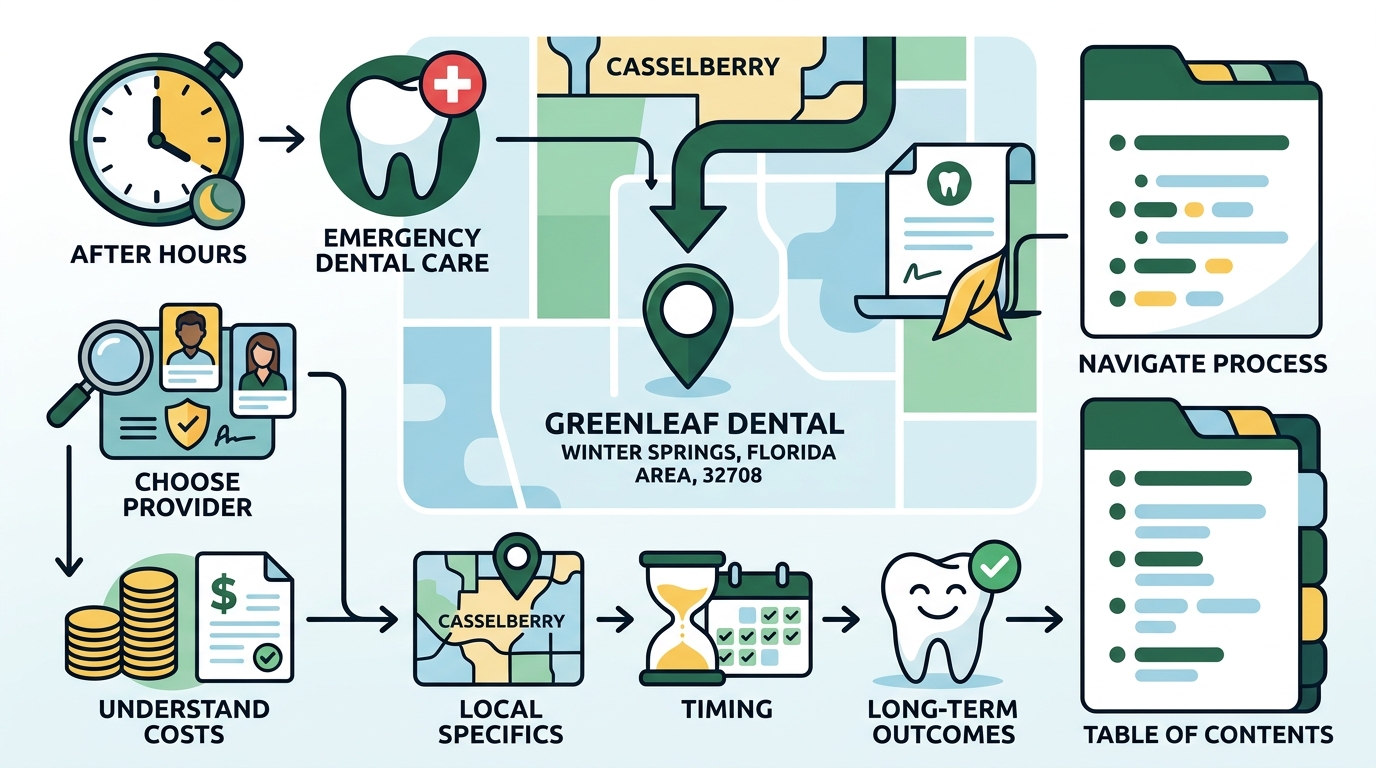
Greenleaf Dental in Winter Springs, Florida, provides emergency dental care for residents in Casselberry and the 32708 area when other offices are closed. This guide explains how to choose a provider, verify credentials, understand costs, and navigate the process. It covers local specifics, timing, and long-term outcomes to help you act quickly and safely.
How to Choose a Provider
Availability and Accessibility
Scope of Services
What to Ask Before Committing
Before you commit to an appointment, ask specific questions to gauge the provider's readiness. These questions help you understand what to expect and avoid surprises. You should ask about their emergency triage process, their availability for same-day appointments, and their approach to pain management. Asking these questions demonstrates that you are an informed patient and helps the provider prepare for your visit. For additional details, review the .
Key Questions to Ask
- Do you accept new patients for emergency visits? For additional details, review the Customer Experience.
- What is your policy on same-day appointments? For additional details, review the Frequently Asked Questions.
- What are your payment options for emergency care? For additional details, review the About.
These questions cover the most critical aspects of an emergency visit. They help you determine if the provider is a good fit for your specific needs. If a provider cannot answer these questions clearly, it may be a sign of poor organization or communication.
How to Verify Credentials
Verifying a dentist's credentials is a simple but important step. You can check their license status through the Florida Board of Dentistry. This ensures that the provider is legally authorized to practice dentistry in the state. You should also check for any disciplinary actions or complaints filed against them. This information is publicly available and can help you make an informed decision.
Checking the License
Visit the Florida Board of Dentistry website to search for the dentist's name. Look for their license number and expiration date. A valid license indicates that the dentist has met the state's educational and ethical standards. If the license is expired or suspended, do not proceed with the appointment.
Reviewing Patient Feedback
Read online reviews from other patients. Look for patterns in the feedback, such as complaints about wait times or billing issues. Positive reviews that mention specific details about the emergency visit are more reliable than generic praise. Use this information to cross-reference your own expectations with the provider's actual performance.
How the Process Works
Understanding the process helps reduce anxiety and sets realistic expectations. The typical emergency dental visit follows a structured sequence. First, you call the office to describe your symptoms. The staff will triage your case and schedule an appointment. Upon arrival, you will check in and provide your medical history. The dentist will then perform an examination, which may include X-rays. Based on the findings, they will propose a treatment plan.
The Triage Call
The initial phone call is crucial. Be honest about your pain level and symptoms. This helps the staff prioritize your case. If your condition is life-threatening, such as severe swelling or difficulty breathing, go to the nearest emergency room. For most dental issues, the office will schedule you for the earliest available slot.
The Examination
The examination is thorough but usually quick. The dentist will look for signs of infection, decay, or trauma. X-rays help identify problems that are not visible to the naked eye. The dentist will explain their findings in plain language. They will outline the recommended treatment and any alternatives.
What It Costs
Emergency dental care can be expensive, but costs vary widely. The price depends on the type of treatment, the complexity of the case, and your insurance coverage. Simple procedures like a filling cost less than complex ones like a root canal or extraction. You should ask for an estimate before the treatment begins. This helps you budget and avoid financial surprises.
Factors Influencing Cost
- Type of procedure: Extractions and root canals cost more than fillings.
- Time of day: After-hours visits may incur additional fees.
- Insurance: Check your plan's coverage for emergency services.
- Materials: The type of material used for a filling can affect the price.
Greenleaf Dental focuses on delivering high-quality treatments in a welcoming environment. While specific prices are not listed, the practice aims to provide transparent billing. Always ask for a detailed estimate to understand what is included.
Common Mistakes to Avoid
Patients often make mistakes that delay treatment or worsen their condition. One common error is waiting too long to seek help. Pain may subside temporarily, but the underlying issue remains. Another mistake is using over-the-counter pain relievers as a long-term solution. These medications mask the pain but do not treat the cause. You should also avoid ignoring swelling or fever, as these are signs of infection.
Delaying Treatment
Delaying treatment allows the problem to escalate. A small cavity can become a large infection. An abscess can spread to other parts of the body. Acting quickly prevents these complications and reduces the overall cost of treatment. Do not wait for the pain to become unbearable before calling a dentist.
Ignoring Warning Signs
Swelling, fever, and bad taste in the mouth are warning signs of infection. These symptoms indicate that the body is fighting an infection. Ignoring them can lead to serious health issues. If you experience these symptoms, seek immediate dental care. Do not rely on home remedies to resolve an infection.
Versus Alternatives
| Option | Pros | Cons |
|---|---|---|
| Dental Office | Comprehensive treatment, specialized equipment | May have wait times, higher cost |
| Urgent Care | Open late, handles pain and infection | No dental procedures, limited follow-up |
| Emergency Room | Available 24/7, handles life-threatening cases | Very expensive, no dental treatment |
| Telehealth | Convenient, low cost | No physical exam, limited treatment options |
For a Specific Situation
The best course of action depends on your specific situation. If you have a broken tooth, you need a dentist who can perform a restoration. If you have an abscess, you need antibiotics and drainage. If you have a knocked-out tooth, you need immediate reimplantation. Each situation requires a different approach. You should describe your specific symptoms to the provider so they can tailor their treatment plan.
Broken Tooth
A broken tooth can be sharp and painful. It can also expose the nerve, leading to infection. The dentist will assess the extent of the damage. They may perform a filling, crown, or root canal. If the tooth is severely damaged, extraction may be necessary. Acting quickly preserves the tooth and prevents further damage.
Knocked-Out Tooth
A knocked-out tooth is a true emergency. You have a limited window to reimplant it. Keep the tooth moist in milk or saliva. Do not scrub it. Get to a dentist within 30 minutes for the best chance of saving the tooth. This is a time-sensitive situation that requires immediate action.
Rules and Protections
Patients have certain rights and protections when receiving dental care. You have the right to informed consent. This means the dentist must explain the procedure, risks, and costs before starting. You also have the right to refuse treatment. If you are not comfortable with a proposed plan, you can ask for alternatives. Additionally, you have the right to see your medical records. These protections ensure that you are treated with respect and dignity.
Informed Consent
Informed consent is a legal requirement. The dentist must explain the procedure in terms you understand. They must also discuss any risks and benefits. You should ask questions until you are fully informed. Do not feel pressured to agree to a treatment you do not understand. Your consent is voluntary and can be withdrawn at any time.
Privacy and Confidentiality
Your medical information is protected by law. The dental office must keep your records confidential. They cannot share your information without your consent, except in specific legal circumstances. This protection ensures your privacy and security. You can ask the office about their privacy policies to understand how your data is handled.
Local Specifics
Local specifics play a significant role in emergency dental care. In Casselberry and Winter Springs, the availability of providers varies. Some offices are located in commercial centers with limited parking. Others are in residential areas with easier access. You should consider the location of the office when choosing a provider. Traffic and parking can add to your stress during an emergency. Greenleaf Dental is located in Winter Springs, Florida, serving patients in the 32708 area. This location makes it accessible to residents in nearby Casselberry.
Geographic Considerations
The distance to the office matters. If you are in severe pain, a shorter drive is preferable. Check the location of the office on a map. Consider the traffic patterns during peak hours. A provider that is slightly farther but has less traffic may be a better choice than one that is closer but congested. Plan your route in advance to minimize delay.
Community Resources
The local community may have resources to help you find emergency care. Local health departments or community centers may have lists of providers. You can also ask your primary care physician for a referral. These resources can help you find a trusted provider quickly. Use them to supplement your own research.
Timing and Outcomes
Timing is critical in emergency dental care. The sooner you seek treatment, the better the outcome. Delaying treatment can lead to complications and higher costs. For example, a small cavity treated early is less expensive than a root canal performed later. Similarly, a knocked-out tooth reimplanted within 30 minutes has a much higher success rate than one left out for hours. You should act as soon as you notice a problem. Do not wait for the pain to subside.
Immediate Action
Immediate action prevents the problem from worsening. It also reduces your anxiety. Knowing that you are taking steps to resolve the issue can be comforting. Call the dentist as soon as possible. If the office is closed, leave a message or use their after-hours line. Most practices have a system for handling after-hours emergencies. Use this system to get the help you need.
Long-Term Impact
Timely treatment has a long-term impact on your oral health. It prevents the spread of infection and preserves your natural teeth. It also reduces the need for more invasive procedures in the future. By acting quickly, you protect your long-term dental health. This proactive approach saves you time, money, and stress.
Results Over Time
The results of emergency dental care are measurable over time. Successful treatment leads to pain relief and restored function. You should expect to feel better within a few days. The dentist will schedule a follow-up appointment to monitor your healing. This follow-up ensures that the problem is fully resolved. If you experience any new symptoms, contact the office immediately. Long-term results depend on your oral hygiene and regular check-ups.
Healing Process
Preventing Recurrence
Key Takeaways
- Greenleaf Dental in Winter Springs provides emergency care for Casselberry residents when other offices are closed.
- Choose a provider with clear availability, transparent pricing, and a good track record.
- Verify credentials through the Florida Board of Dentistry and read patient reviews.
- Ask specific questions about triage, same-day appointments, and payment options.
- Understand the process: triage call, examination, treatment plan, and follow-up.
- Costs vary by procedure, time of day, and insurance coverage. Ask for an estimate.
- Avoid common mistakes like delaying treatment or ignoring warning signs.
- Timing is critical. Act quickly to prevent complications and reduce costs.
Frequently Asked Questions
Does Greenleaf Dental accept new patients for emergencies?
Yes, Greenleaf Dental accepts new patients for emergency visits. They aim to deliver high-quality dental treatments in a welcoming environment. You can call their office to schedule an appointment.
What should I do if I have a knocked-out tooth?
Keep the tooth moist in milk or saliva. Do not scrub it. Get to a dentist within 30 minutes for the best chance of saving the tooth. This is a time-sensitive emergency.
How much does emergency dental care cost?
Costs vary by procedure and insurance. Simple procedures cost less than complex ones. Ask for an estimate before the treatment begins to avoid surprises.
Can I go to an urgent care center for a dental emergency?
Urgent care centers can provide pain relief and antibiotics but cannot perform dental procedures. For most dental emergencies, a dental office is the better option.
How do I verify a dentist's license?
Check the Florida Board of Dentistry website. Search for the dentist's name to verify their license status and check for any disciplinary actions.
What are the signs of a dental infection?
Does Greenleaf Dental offer after-hours care?
Greenleaf Dental is open in your time of need when other offices are closed. They provide comprehensive and emergency dental care services to the local community.