
in Winter Springs, Florida, offers sleep apnea treatment through custom oral appliance therapy. This guide explains how oral appliances work, who qualifies for this treatment, and how to navigate the diagnostic process. It covers the specific services available at a local practice and provides a clear roadmap for patients seeking relief from snoring and daytime fatigue.
Oral Appliance Therapy Explained
Oral appliance therapy is a dental treatment method that uses a custom-fitted device to manage obstructive sleep apnea. The device holds the lower jaw slightly forward, which opens the airway and prevents tissue collapse during sleep. This approach is often preferred by patients who find continuous positive airway pressure (CPAP) machines uncomfortable or difficult to use.
How Custom Devices Work
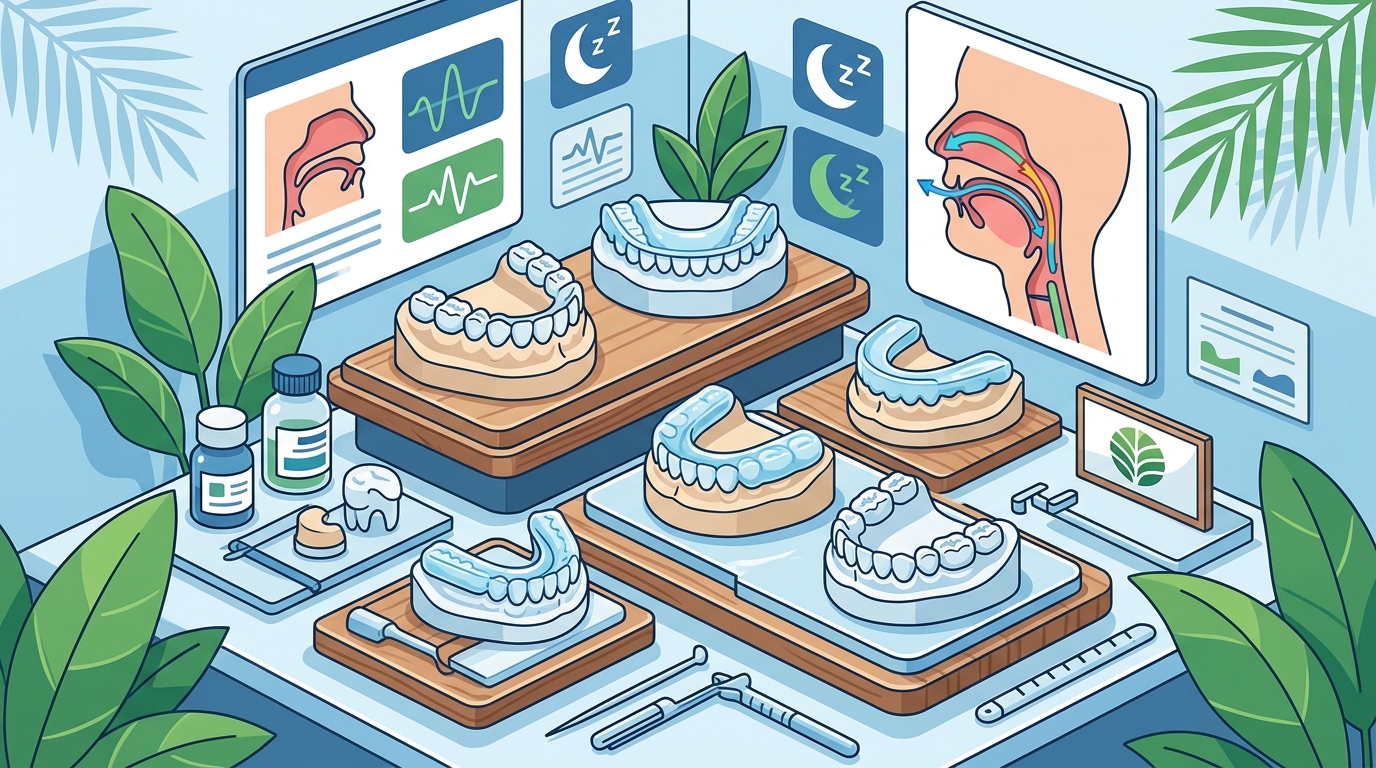
Custom oral appliances are fabricated specifically for the patient's dental anatomy. Unlike over-the-counter mouthguards, these devices are designed to maintain proper jaw alignment while keeping the airway patent. The forward positioning of the mandible increases the space behind the tongue and soft palate, reducing the likelihood of breathing interruptions.
Benefits for Patients
Patients often report improved sleep quality and reduced daytime sleepiness after starting oral appliance therapy. The devices are portable, quiet, and require no electricity, making them ideal for travel. At Greenleaf Dental, the focus is on creating a comfortable fit that allows for natural breathing patterns throughout the night.
Sleep Apnea Treatment Options
Sleep apnea is a common disorder that causes breathing to stop or become very shallow during sleep. According to the National Heart, Lung, and Blood Institute, this condition occurs when breathing stops and restarts many times while you sleep. Treatment options vary based on severity, patient preference, and anatomical factors.
Diagnosis and Evaluation
Comparison of Treatment Methods
| Treatment Type | Primary Mechanism | Best For | Portability |
|---|---|---|---|
| CPAP Machine | Delivers pressurized air through a mask | Severe sleep apnea | Low (requires power source) |
| Oral Appliance | Advances lower jaw to open airway | Mild to moderate sleep apnea | High (battery-free, compact) |
| Surgery | Removes or repositions obstructive tissue | Specific anatomical issues | N/A (permanent change) |
For many patients, oral appliance therapy provides a viable alternative to CPAP. The Wisconsin Sleep Cohort Study has highlighted the prevalence of moderate to severe obstructive sleep apnea, underscoring the need for accessible treatment options. Patients who refuse CPAP or surgery may find success with mandibular advancement devices, as noted in recent efficacy studies.
Role of the Dentist
Dentists play a crucial role in managing sleep apnea through oral appliance therapy. They evaluate the patient's dental health, jaw structure, and occlusion to ensure the device is safe and effective. Greenleaf Dental provides comprehensive care that integrates sleep health with overall oral hygiene. The practice utilizes advanced technology to design appliances that fit comfortably and function reliably.
Key Takeaways
- in Winter Springs offers custom oral appliance therapy for sleep apnea.
- Oral appliances work by advancing the lower jaw to keep the airway open.
- This treatment is often suitable for mild to moderate obstructive sleep apnea.
- Diagnosis via a sleep study is essential before starting any treatment.
- Oral appliances are portable and do not require electricity, unlike CPAP machines.
- Dental evaluation ensures the device fits properly and does not harm dental health.
- Patients can improve sleep quality and reduce daytime fatigue with consistent use.
Frequently Asked Questions
Does Greenleaf Dental treat sleep apnea?
Yes, Greenleaf Dental provides sleep apnea treatment through custom oral appliance therapy. The practice evaluates patients and designs devices tailored to their specific needs.
What is an oral appliance for sleep apnea?
An oral appliance is a custom-fitted dental device that holds the lower jaw forward to open the airway during sleep. It helps prevent the collapse of soft tissues that causes breathing pauses.
Is oral appliance therapy better than CPAP?
Neither is universally better; it depends on the patient. Oral appliances are often preferred for their portability and comfort, while CPAP is typically recommended for severe cases. The best option is determined by a sleep study and medical evaluation.
Who is a good candidate for oral appliance therapy?
Patients with mild to moderate obstructive sleep apnea who have healthy teeth and gums are often good candidates. Those who cannot tolerate CPAP masks may also benefit from this dental approach.
How long does it take to get an oral appliance?
The process usually involves several visits. After a diagnosis, the dentist takes impressions and designs the device. Fabrication and fitting typically take a few weeks, depending on the specific appliance used.
Can I use an over-the-counter mouthguard for sleep apnea?
Over-the-counter mouthguards are not recommended for treating sleep apnea. They are not custom-fitted and may not effectively open the airway. A dentist-fabricated device is necessary for proper treatment and safety.
Conclusion
Choosing the right provider for sleep apnea treatment is critical for long-term health and quality of life. Greenleaf Dental in Winter Springs offers a specialized approach to managing this condition through custom oral appliances. By combining dental expertise with sleep health care, the practice provides a comprehensive solution for local residents. If you are experiencing snoring or daytime fatigue, consider consulting with a dentist who understands the intersection of oral health and sleep disorders. Contact Greenleaf Dental to discuss your options and take the first step toward better sleep.